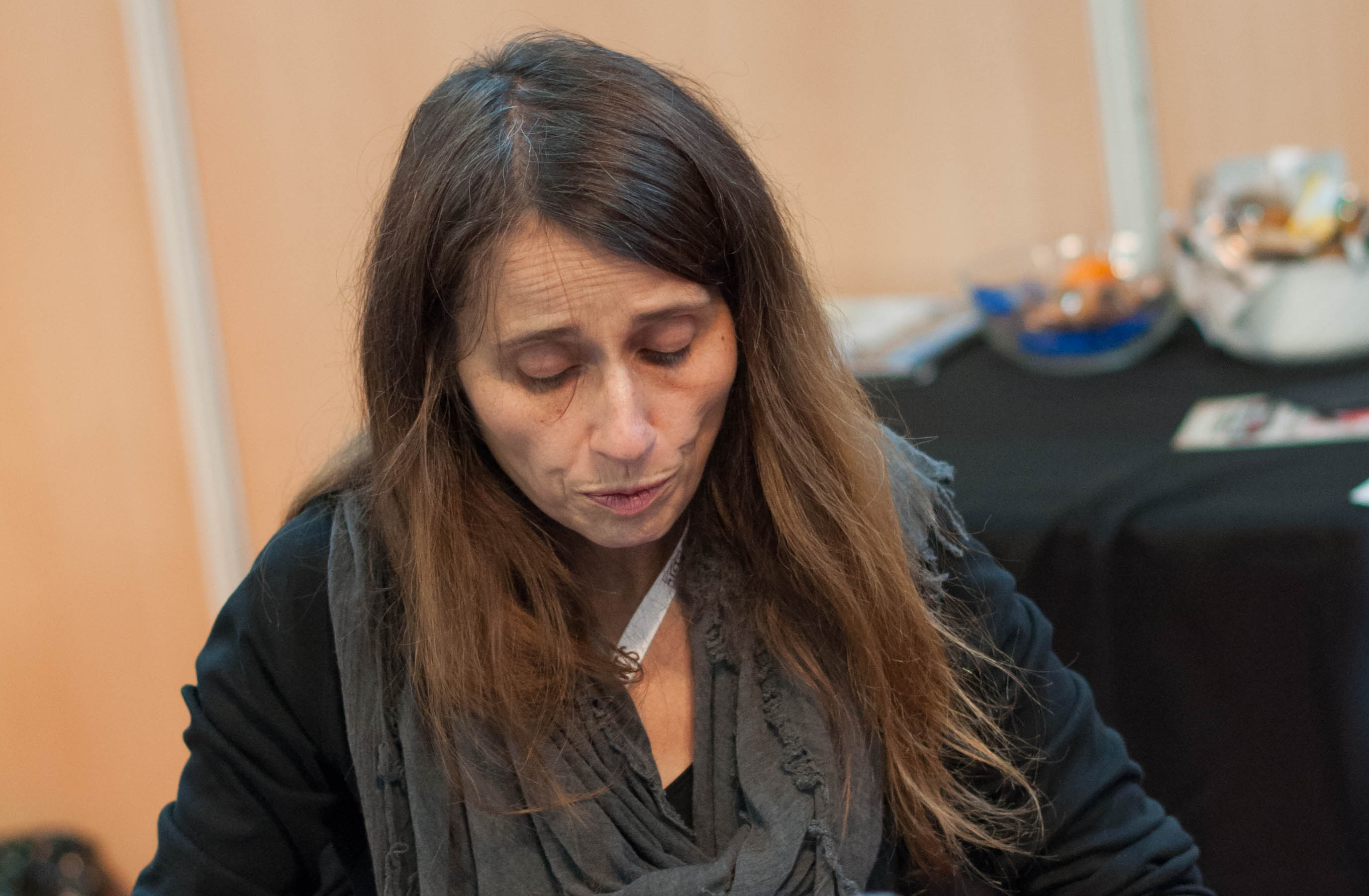
Claire Wendling is a French illustrator and comics artist whose career also includes animation and video-game design. For students of digital painting, her value extends beyond medium: she offers a reason to spend time on drawing, gesture and visual invention before thinking about a finished rendering.
Comics, animation and sketchbooks
According to the Magelis creative-industry profile, Wendling was born in Montpellier in 1967 and graduated from the art school in Angoulême in 1989. That year she received the Angoulême festival's Alph'Art Avenir award. Her collaborations in publishing developed into a career that included Les Lumières de l'Amalou, written by Christophe Gibelin.
In 1997 she spent several months working at Warner in the United States, contributing to projects including Quest for Camelot. On returning to France, she published Desk, a collection of drawings made in Los Angeles. Work on the visual design of Alone in the Dark IV followed in 2000. Those shifts make her bibliography more than a sequence of comic albums: it includes drawings produced while testing other ways to work.
Drawing as the common thread
In an interview conducted by Franck Aveline in 1998, Wendling distinguished her commitment to drawing from a commitment to comics as an industry. Comics were one means of expression. She explained that working in animation offered a chance to broaden her abilities after completing Les Lumières de l'Amalou, and to move beyond the detailed demands of her previous work.
Her account also complicates the usual story of a smooth professional progression. Moving to another country meant arriving with her drawings and ideas while facing uncertainty about language and an unfamiliar studio environment. Looking back, she described increased flexibility in style and subject as an important result of the experience. Read as a historical interview, it gives context to a career built across formats rather than a claim about her present-day routine.
A study to try
Our study suggestion: draw the same invented animal in five different actions, such as listening, reaching, recoiling, resting and turning. Keep each drawing small enough that you cannot solve it with fur texture or elaborate shading. Check whether the weight and intention change before you add a face. Then choose one pose and build a painting around it, preserving the gesture through every later stage. Treat the drawings as possibilities to compare, not five mandatory polished illustrations. This is an exercise in transferable drawing decisions, not a reconstruction of Wendling's personal working method.