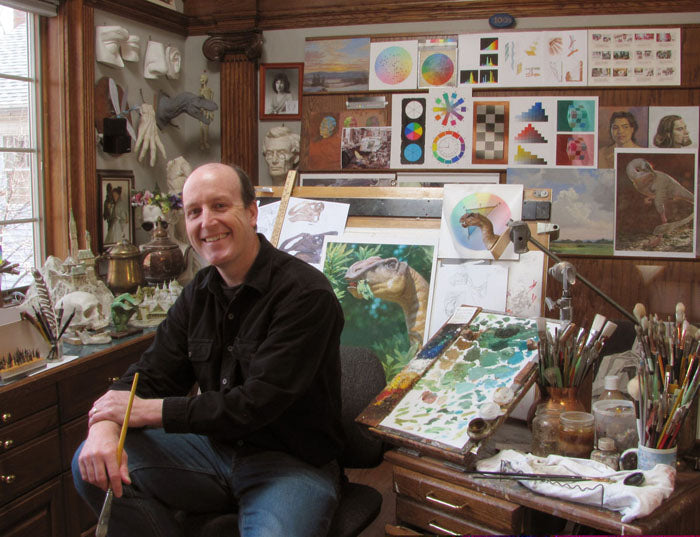
Terryl Whitlatch connects creature design to the study of living animals. Her career includes the alien wildlife of Star Wars: Episode I – The Phantom Menace, natural-history illustration and books that explain the anatomy beneath fantastic bodies. For an aspiring concept artist, she offers an unusually useful example of research becoming a professional specialty.
A closer look at the work
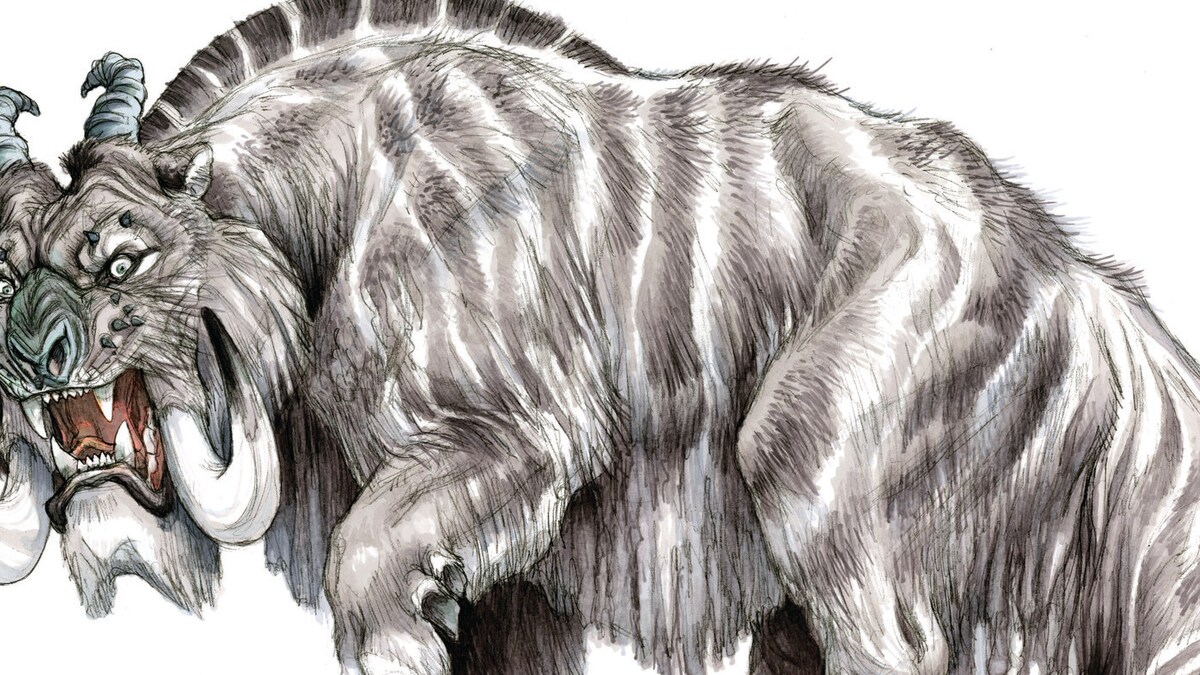
The creature feels heavy before we know anything about its fictional world. The large shoulder mass, thick neck and overlapping folds give the head a convincing support structure. Whitlatch then adds unfamiliar horns and tusks without losing that physical logic. Notice how the stripes follow the changing direction of the body rather than sitting on top as a flat pattern. For a creature designer, this is a useful distinction: surface detail should explain volume as well as decorate it.
From natural history to film
In her 2016 ArtStation interview, Whitlatch traced that interest to a childhood surrounded by animals and art. She studied zoology at Sonoma State University before attending art schools in the Bay Area. Her graduation work, including paintings of real animals, attracted Lucasfilm art directors. Early assignments included creatures for LucasArts' The Dig; wildlife illustration followed, before animal-design work on Jumanji brought her further into feature films.
On The Phantom Menace, her work included Jar Jar Binks, Sebulba and Naboo's sea creatures. These designs required more than an appealing first drawing: a production team needed to understand how each animal could exist and move.
What happens after a concept is approved
Speaking to SFFWorld in 2016, Whitlatch described a process of meetings with George Lucas, assignments coordinated by art director Doug Chiang, and repeated design reviews. Approved creatures then received anatomical drawings from several viewpoints, covering skeleton, muscles and surface forms. She sometimes worked out teeth, tongues or movement studies so that modelers, riggers and animators could use the design.
That production experience also informs her books. Science of Creature Design and Principles of Creature Design began as one project before the material was divided: the former emphasizes real anatomy; the latter applies those foundations to imaginary species. In the same interview, she explains why drawing real animals remains essential even for artists pursuing fantasy. A recognizable species provides a demanding check on observation.
A study to try
Our study suggestion: choose an animal you can observe safely, or use a clear wildlife reference. Draw its body as ribcage, pelvis and limb joints before adding fur or scales. Then invent a related creature by changing one functional requirement: make it climb, swim or carry more weight. Redraw the supporting anatomy rather than simply attaching decorative parts. Compare both drawings and mark which changes actually support the new behavior. This exercise turns reference gathering into a design decision and makes weaknesses easier to diagnose before a polished painting hides them.