A convincing science-fiction environment starts with questions that a mood board alone cannot answer. What does this object do? How large is it? Which surfaces belong to equipment, and which belong to the landscape?
Start with an identified image
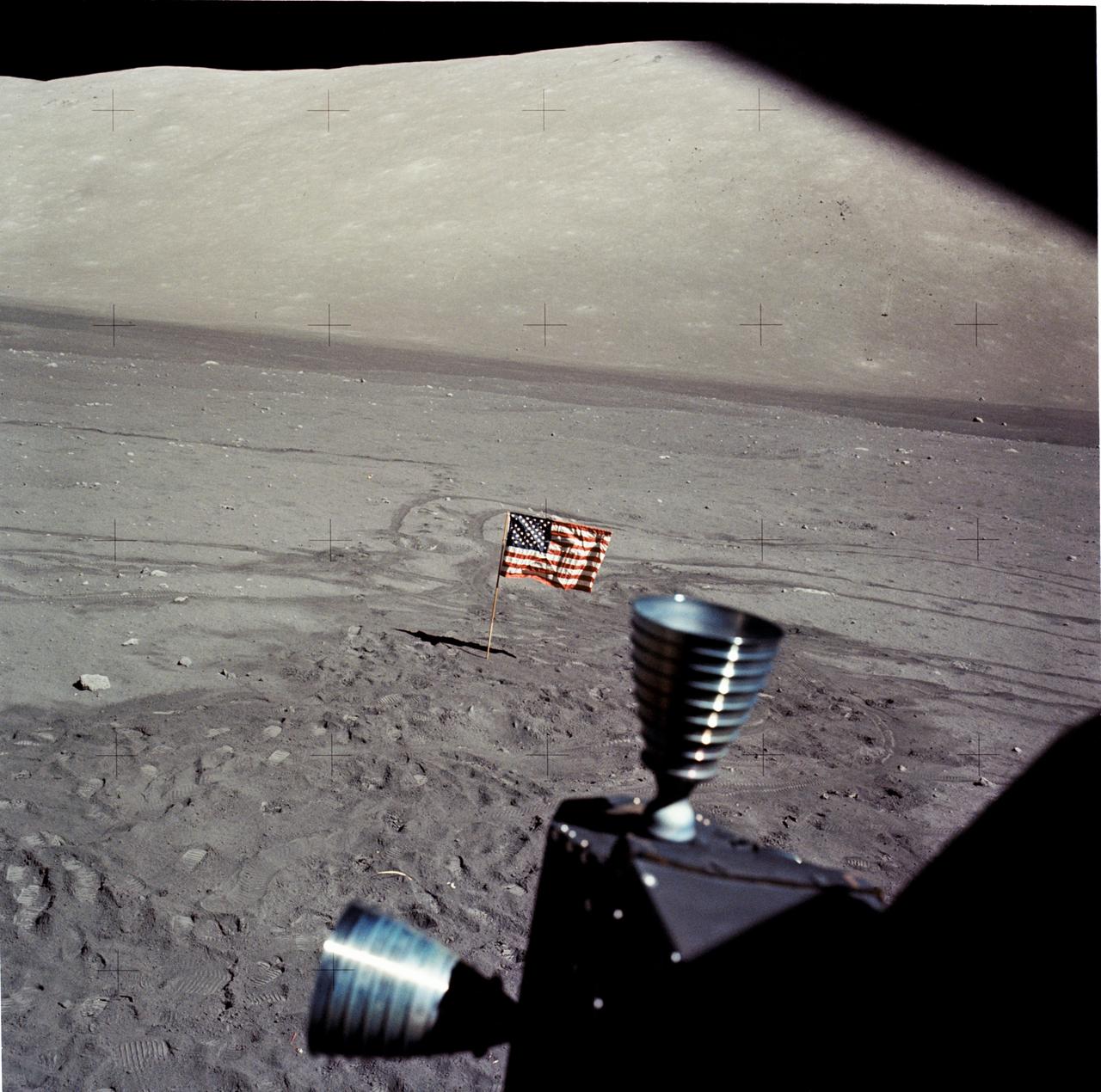
The photograph above is NASA’s Apollo 17 frame AS17-145-22216, taken in December 1972. Its archive description identifies a view through the Lunar Module window toward the north Massif, with the module’s thrusters in the foreground and the United States flag on the surface. That caption provides more useful design information than a detached image labelled “space reference.”
NASA’s Apollo 17 photography report also explains that surface images supported geological documentation and measurements. The photographs were records of a real working mission. They can therefore help an artist ask functional questions, even when the eventual setting is entirely fictional.
Separate three reference jobs
Our suggested method is to annotate a copy of the image in three passes. First, mark scale evidence: recognizable equipment and the relationship between nearby forms and the distant terrain. Then mark material evidence: where a metal surface, a dark opening or a dusty slope changes the response to light. Finally, mark composition: the large shapes that make the view readable.
In this frame, the nearby hardware interrupts the broad terrain. That overlap gives the viewer an immediate position inside a machine. For a fictional base, a similar arrangement could establish a viewpoint before you add a single futuristic panel.
Design a function, then a variation
Try this original exercise: design a small observation shelter for two people. List three requirements before sketching—for example, seeing the horizon, reaching equipment and identifying the entrance. Make one thumbnail for each requirement, emphasizing the shapes that communicate it.
Use the Apollo image to inform a specific decision, such as foreground framing or a change in surface treatment. Do not copy every visible component into a new silhouette. If you cannot explain why a borrowed shape exists, either research its role or label it as an invented feature in your own notes.
A second pass can change the setting to a different fictional world. Reconsider the ground, light and operating conditions instead of assuming that one Moon photograph describes every environment in space.
Keep the source attached
Save the mission name, image number, credit and original link beside your study. NASA’s media guidelines describe permitted uses and identify important exceptions, including third-party material and protected logos. The photograph used here is credited NASA material; its use does not imply NASA endorsement.
Reference research becomes useful when it changes a design decision. A small board with clear captions and a purpose for each image is easier to learn from than hundreds of unexplained pictures.