In Ramón Núñez’s laundry scene, the room seems to tip towards us. A raised leg stretches across the picture, faces crowd the edges, and a patterned trouser leg becomes a major shape in the composition. The setting is ordinary; the staging is anything but.
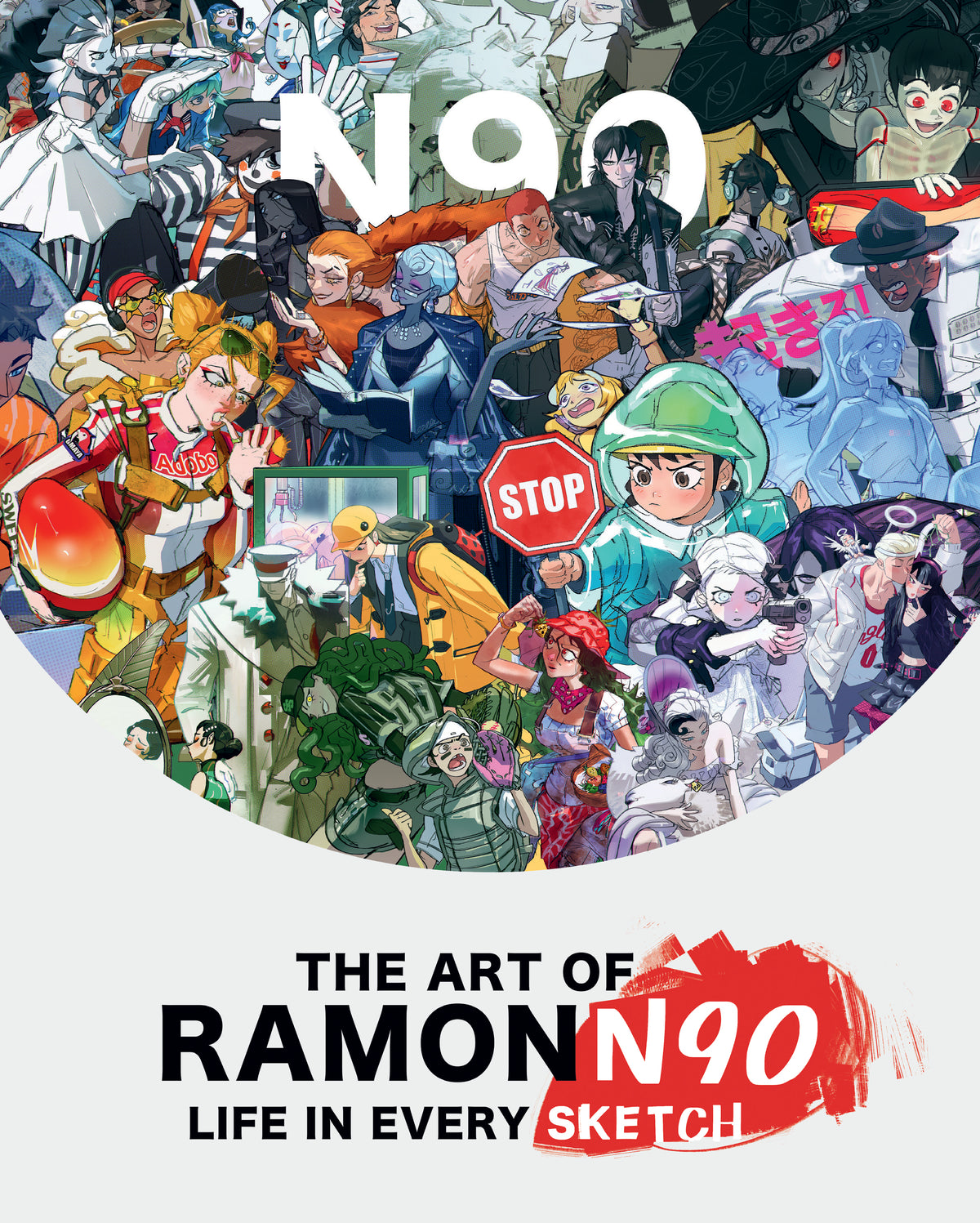
The Art of RamonN90: Life in Every Sketch is Ramón’s debut art book with 3dtotal. The publisher’s description lists a 152-page hardcover combining galleries, character tutorials and reflections on creative block and artistic identity. The promotional artwork gives a good indication of the visual appeal: people doing recognisable things, drawn with considerable freedom in proportion and gesture.
Clothing and props help the acting
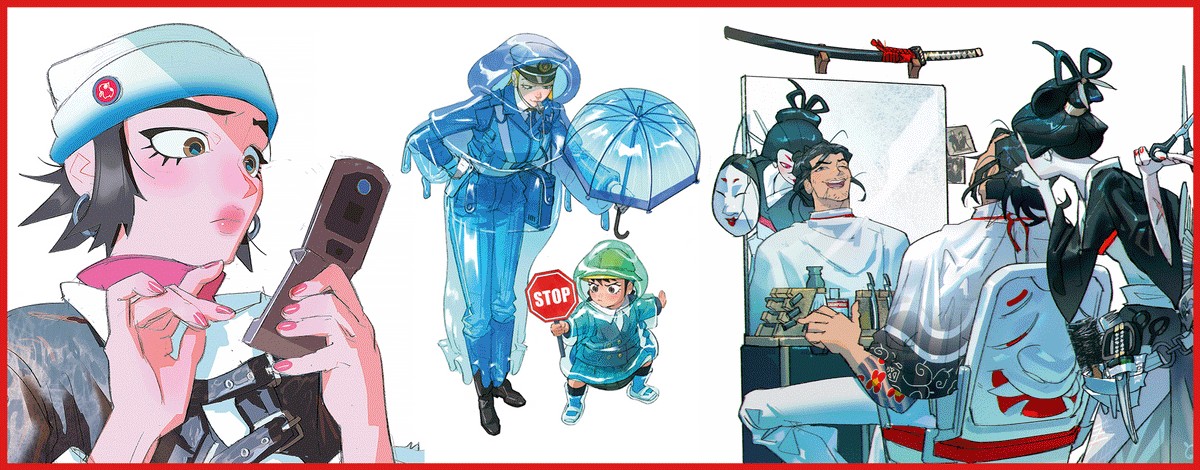
In the opening character selection, a flip phone, rainwear and a small stop sign each give a figure something to do or a role to occupy. They are more than accessories added after the pose. A hand holding a phone changes the direction of attention; an umbrella changes the silhouette around a head.
That is one reason these figures reward a closer look. The designs can be elaborate without requiring a fantasy backstory to be understandable. You recognise the action first, then enjoy the exaggeration of shape, clothing and colour around it.
The laundry scene puts us inside the group
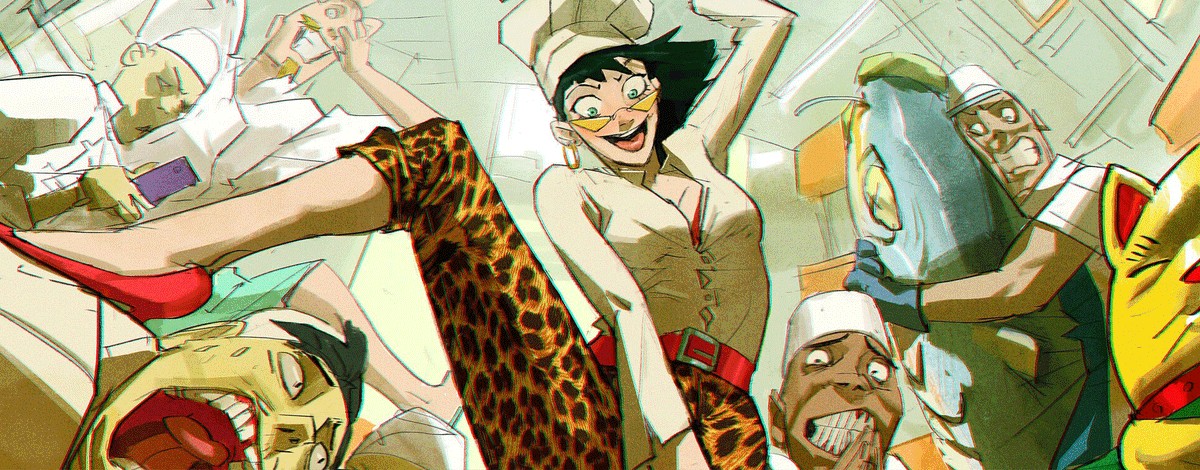
The low viewpoint and overlapping figures make this scene feel crowded without treating every person as a separate portrait. Some faces are cropped by the frame. The central figure’s expression is easy to find, while the raised leg pulls the composition sideways. The pale room gives those stronger shapes space to register.
For an illustrator, this is a more useful starting point than trying to identify the brush. Before any surface treatment, there is a decision about where the viewer stands and which gesture carries the scene. Rendering can develop that decision, but it cannot substitute for it.
The leopard pattern makes that raised leg unusually prominent. Its small repeated marks could become visual noise, but they sit inside one large, continuous trouser shape. Around it, the white shirt and pale walls offer simpler areas. This is a useful distinction when painting patterned fabric: the pattern can be busy while the silhouette carrying it remains clear.
The expressions work together, too. The central grin is surrounded by faces entering from different edges, so the frame feels like a moment caught in the middle of a commotion. We are reading a group before we have identified everybody in it. That reading comes from the image, not from a claim about Ramón’s original brief or the story he intended.
A small prop can change the whole character
Return to the blue rainwear in the opening montage. The adult and child share a colour family, but their proportions and poses keep them distinct. The red stop sign interrupts those blues with a compact, immediately legible shape. It gives the child a task and a direction of attention without needing an explanatory caption.
The barbershop image uses another relationship: a customer seen in the mirror and the figure working in front of it. The mirror makes it possible to show an expression and the back of an elaborate outfit in the same composition. There is a practical storytelling reason for that arrangement, beyond the pleasure of drawing the costume. These are the kinds of choices worth carrying away from an art book, even if your own characters look completely different.
For someone building a character portfolio, the previews suggest a productive question: can this person do something ordinary in a way that still feels particular to them? A pose with a phone, a haircut or a rainy walk can expose how well costume and gesture work together. A dramatic costume sheet alone may never ask the character to behave.
The practice behind a recognisable style
Ramón’s public practice post stresses regular work and honest assessment. It is useful context for looking at an art book: the finished selection is the visible result of a practice, with its weaker studies and revisions largely out of view.
3dtotal also published a video interview in May 2025. Its introduction identifies failure, portfolio advice and listening as subjects of the conversation. For readers interested in the person behind the drawings, that interview is a worthwhile companion to the artwork rather than another gallery to scroll past.
The book’s combination of character-making and creative-life topics is particularly relevant to someone who can finish an illustration but is still trying to understand what they want their work to be. The images here are publisher previews; this introduction is based on those previews and the linked public sources.
Where to find the book
The publisher lists the physical format as 268 × 213mm, with full-colour pages. Those specifications are useful when comparing the book with a digital preview or another edition. The English-language hardcover uses ISBN 9781915992222. 3dtotal lists a signed special edition with a mini print. The US retailer links below provide other buying options; check the edition, shipping and current availability on the store you choose.
Jesus Conde wrote the foreword and knows Ramón personally. The artwork shown here comes from the publisher’s promotional selection. Store links contain no affiliate tracking.