A location can feel calm, exposed or ominous before a character enters the frame. One way to practice that change is to keep the drawing fixed and give color and light the entire assignment.
What Monet kept returning to
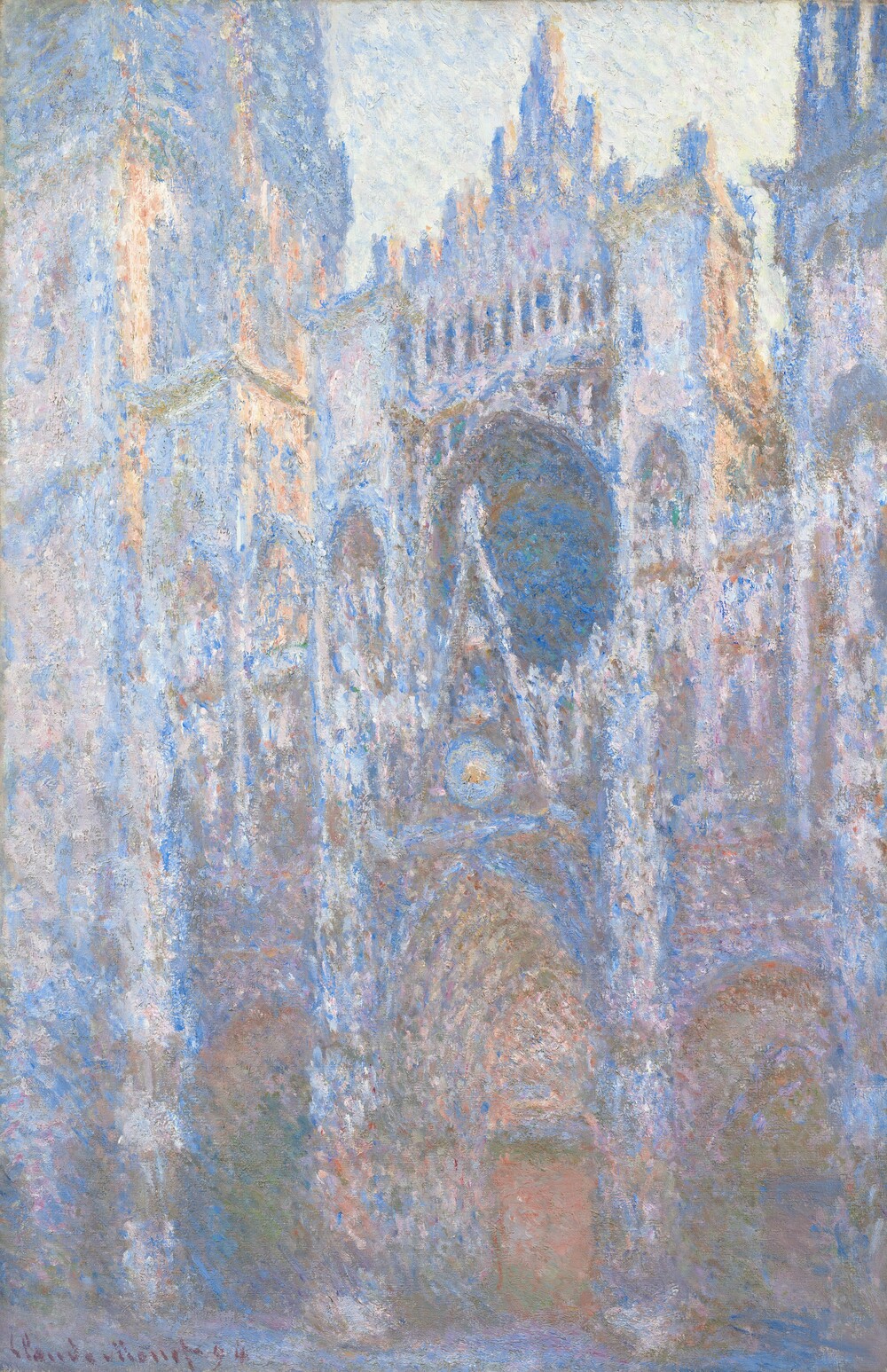
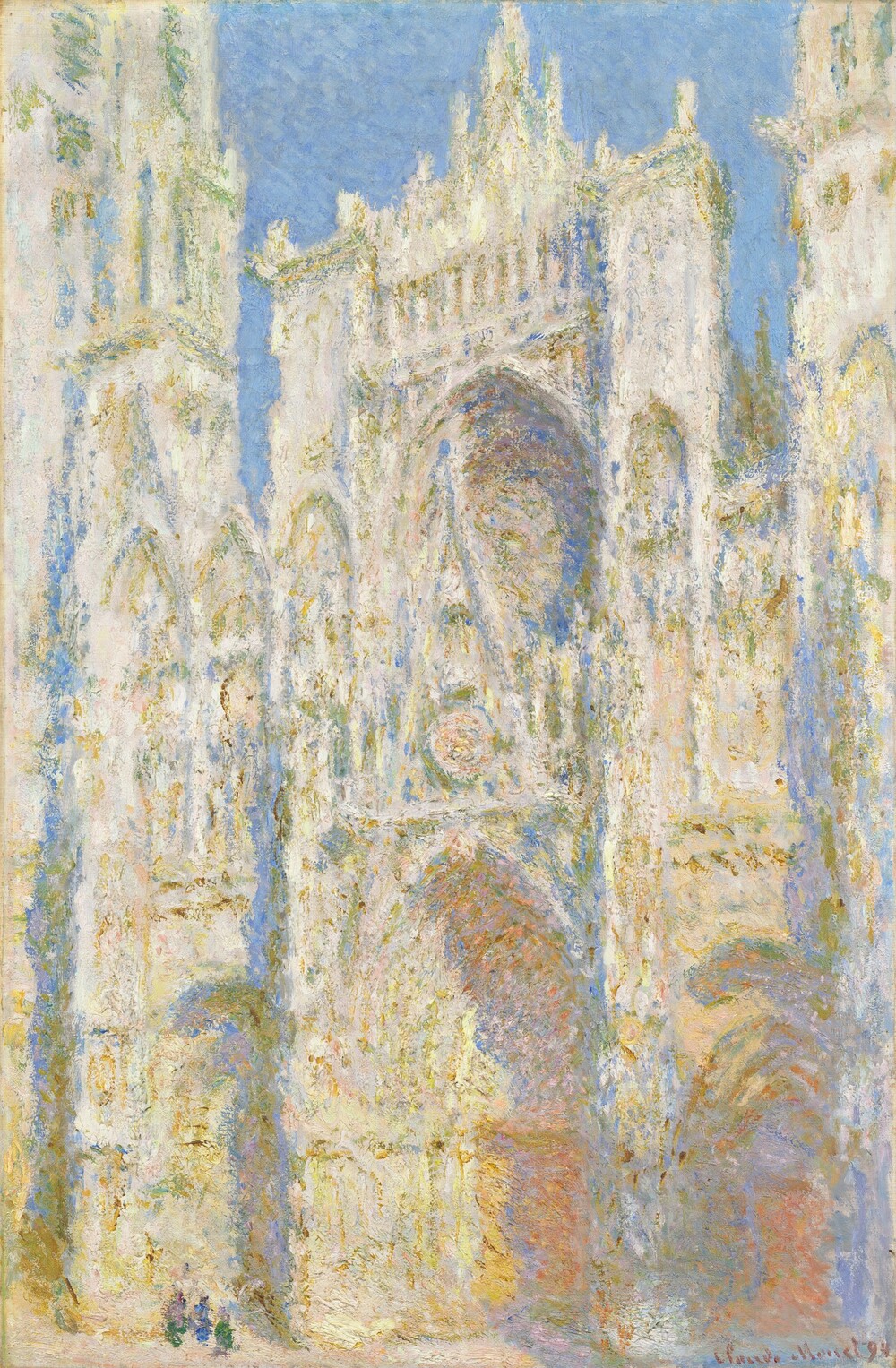
The National Gallery of Art explains that Monet worked on his Rouen Cathedral series in 1892 and 1893, then completed canvases in his studio in 1894. He moved between paintings as the effects of light and atmosphere changed. The museum’s two examples reproduced here carry the same date, yet the building produces quite different impressions.
The cathedral’s architecture gives the comparison a stable structure. In our reading of West Façade, lavender and blue make the stone feel absorbed into the surrounding air. In West Façade, Sunlight, the pale warm passages give the face of the building a brighter presence. Look at the doorway and the small dark accents before getting distracted by individual brushstrokes.
Translate the question, not the brushwork
For concept art, the useful connection is variation under a constraint. If a location is already designed, a lighting study can explore its emotional role without changing every roofline. These Monet paintings are not production color scripts; the comparison is our suggested learning exercise.
Make three small copies of an original street, room or landscape sketch. Keep the camera, silhouettes and main objects in the same positions. Assign a different intention to each version: welcoming, uncertain and abandoned, for example. Describe the intended impression before choosing a palette.
Change relationships deliberately
- Choose where the strongest light-dark contrast should sit in each version. Do not automatically preserve the same focal point.
- Group the image into a few broad color families. Decide which areas share the light and which belong to shadow.
- Change one major condition at a time: light direction, cloud cover or the relationship between an interior light and the exterior.
- Compare all three thumbnails together. Remove small details that are hiding a weak lighting decision.
Judge the sequence at a small size
Our suggested review is to show the studies without their labels and ask which mood each one suggests. A mismatch is useful feedback. It may mean the chosen color is less influential than the size of the bright area, the direction of a shadow or an unexpectedly strong edge.
The goal is not to assign universal emotions to particular hues. It is to learn which relationships change the reading of your specific scene—and to make those choices before committing to a polished painting.