The most inviting thing about Yatamon is that somebody has already made a mess of it. Its walls are painted over, its vehicles look usable, and a cooking pot can turn into a creature. This is a fantasy city with room for an ordinary day.
Tales from Yatamon is a 160-page supplement from 1985 Games, set in Obojima’s largest city. The publisher’s preview brings together urban adventures, vehicles and creatures. For an illustrator, the appeal is how much of that world comes through in familiar objects: a small truck, a bicycle basket, a wall-mounted air conditioner.
A street with more than one story
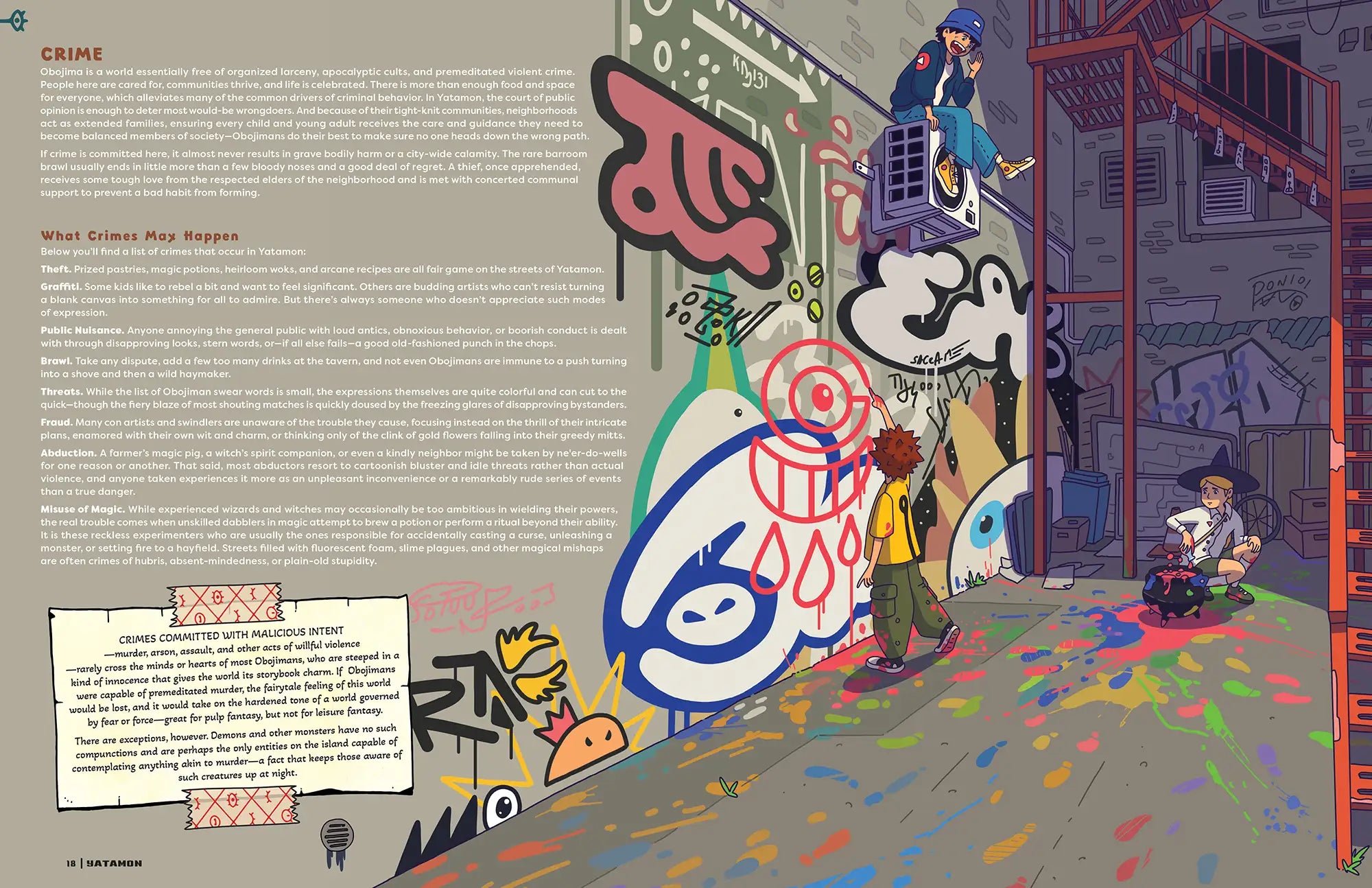
The alley above has three figures at different heights. One sits on the air-conditioning unit; another walks along the wall; a third crouches near the back. That arrangement gives the architecture a social use. The eye moves between people rather than stopping at a decorative building facade.
There is a pleasing disagreement between the wall and the space behind it. The graffiti is large, flat and bright. The narrower passage recedes through cooler, darker planes. You can enjoy the image as a graphic composition and still understand where somebody could walk. The painted ground carries the activity out towards us.
That is what makes this a useful reference for environment work. An empty alley would show a location. These small occupations of the space suggest a neighbourhood. A convincing setting often needs that second layer of information before it needs more architectural detail.
The setting also needs to support play. The publisher lists vehicles, city backgrounds and spells alongside the adventures, including a Reporter background and graffiti-related magic. Those are modest but telling choices: the activities offered to players belong to this particular city. An environment artist can make a similar connection by deciding what somebody comes to a place to do before filling its shelves.
In a painting, that might be the difference between a generic shop and a shop halfway through a delivery. The same building can communicate a different hour, workload and owner through what occupies the doorway. This is an application of the preview’s everyday approach, not an additional location described in the book.
The submarine has somewhere to sit
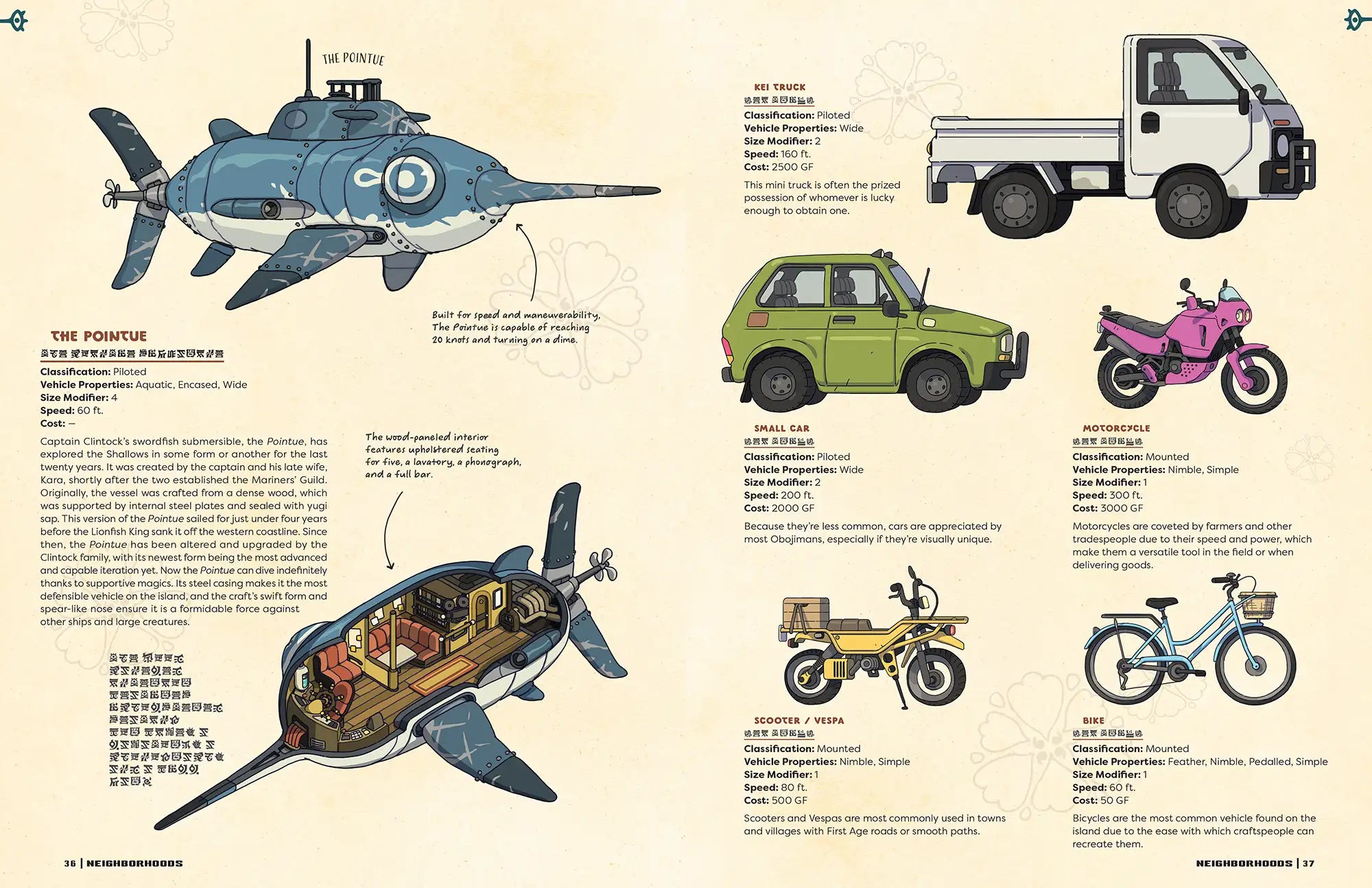
The Pointue, the swordfish-shaped submersible in this spread, is especially enjoyable because the cutaway answers the obvious question: what is inside? Its upholstered seats and wood-lined interior turn an amusing silhouette into a place to spend time. Beside it, the little truck and bicycle keep the scale of invention close to everyday transport.
For a vehicle designer, an exterior and a cutaway have different jobs. The outside makes us recognise and remember the object; the inside explains how a person inhabits it. Putting both on a sheet can expose a design problem early: an attractive shell may leave no plausible room for the driver, cargo or entrance.
Notice how little the ordinary vehicles have to announce themselves. The truck is pale, the car green, the motorcycle pink and the bicycle blue. Each has a recognisable overall shape and a clear use. The submarine can carry the more extravagant idea because the whole spread is not trying to outdo it. For a concept sheet, that restraint lets the unusual design stay unusual.
The cutaway also changes the kind of question a viewer can ask. From outside, we might wonder how the craft moves. Inside, we start considering who sits beside whom and what happens on a long journey. An interior does not have to explain every piece of engineering to create that sense of life. It needs a few convincing relationships between the people, the furniture and the shell around them.
Start with an object people recognise
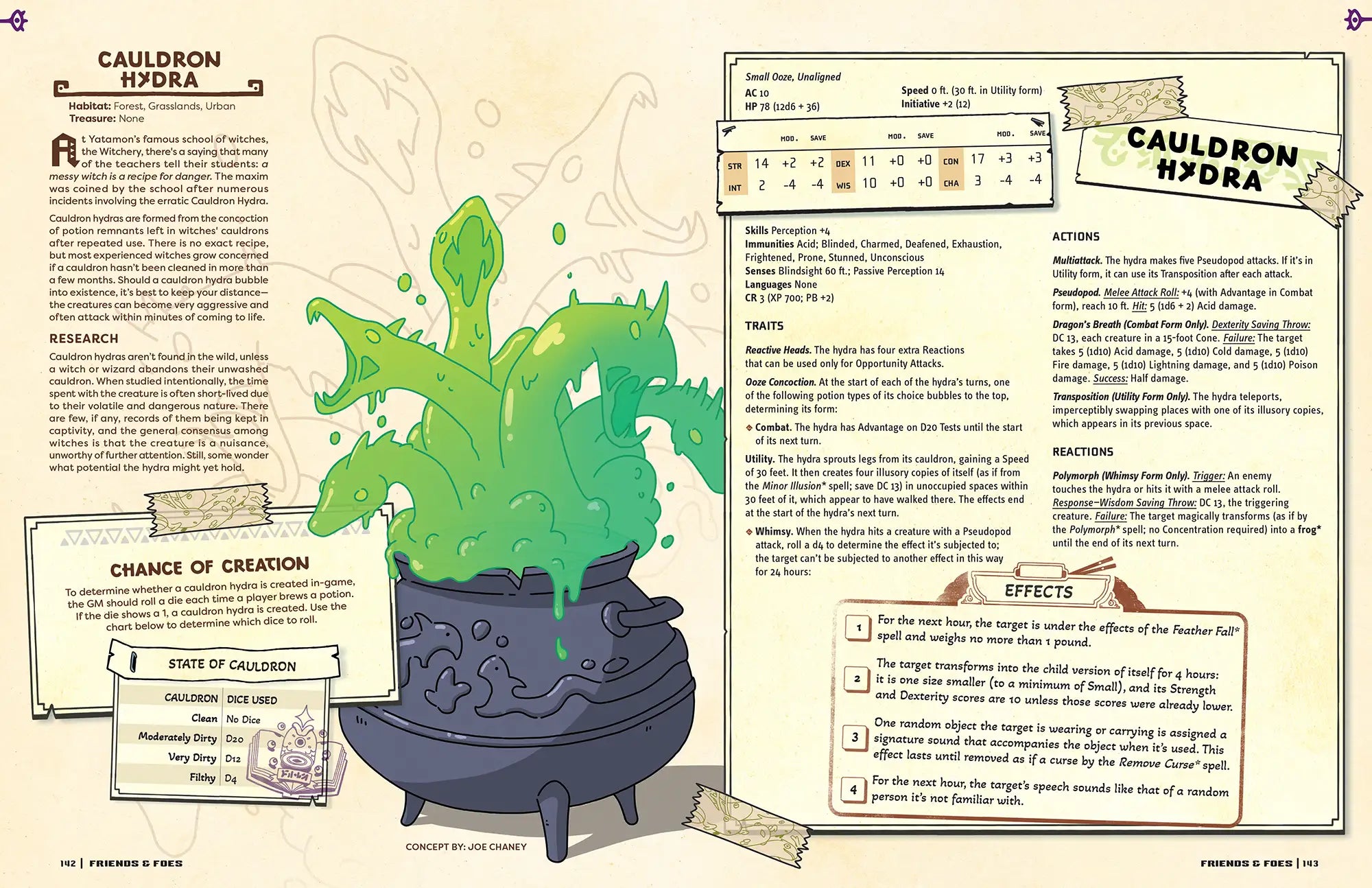
The Cauldron Hydra uses a similarly direct construction: a dark cooking vessel supports a bright, many-headed mass. The preview credits the concept to Joe Chaney. The container gives the creature a domestic starting point, which makes the transformation easy to grasp.
Across these previews, the strongest connection is between the familiar and the invented. The world can accommodate a bizarre creature because it also makes room for transport, clutter and people hanging around. That balance is worth studying when a fantasy environment feels impressive but strangely unoccupied.
Leave room for the next event
A useful way to look at these images is to imagine somebody entering them a moment later. Is there a path through the alley? Somewhere to sit in the vehicle? Something that can change when the creature moves? Those questions keep an environment from becoming a display case. They are especially useful in a personal painting, where there may be no level designer or storyteller to challenge a beautiful but unusable arrangement.
Yatamon’s appeal, in these samples, is that its design leaves such possibilities open. The illustrations supply enough structure to understand the setting and enough interruption to imagine another small story beginning there.
The PDF is listed by the publisher as an instant download. D&D Beyond separately scheduled its platform release for October 27, 2026; that roadmap should be checked against the current store before buying for a particular platform.