A good environment concept helps a production make decisions. Where does the character stand? What can the audience understand from the first glance? Which part of the landscape matters to the action? David Revoy's published artwork for Blender's Spring is useful because it preserves several answers, including ideas that did not survive into the finished film.
Painting in conversation with the story
Revoy's October 2017 account describes a week of preproduction with director Andy Goralczyk. After reading the story, he developed characters and major environments, and began a color storyboard for a complex action sequence. The work was already moving between different scales: a whole landscape, a character design and a sequence of actions. Read his original preproduction account.
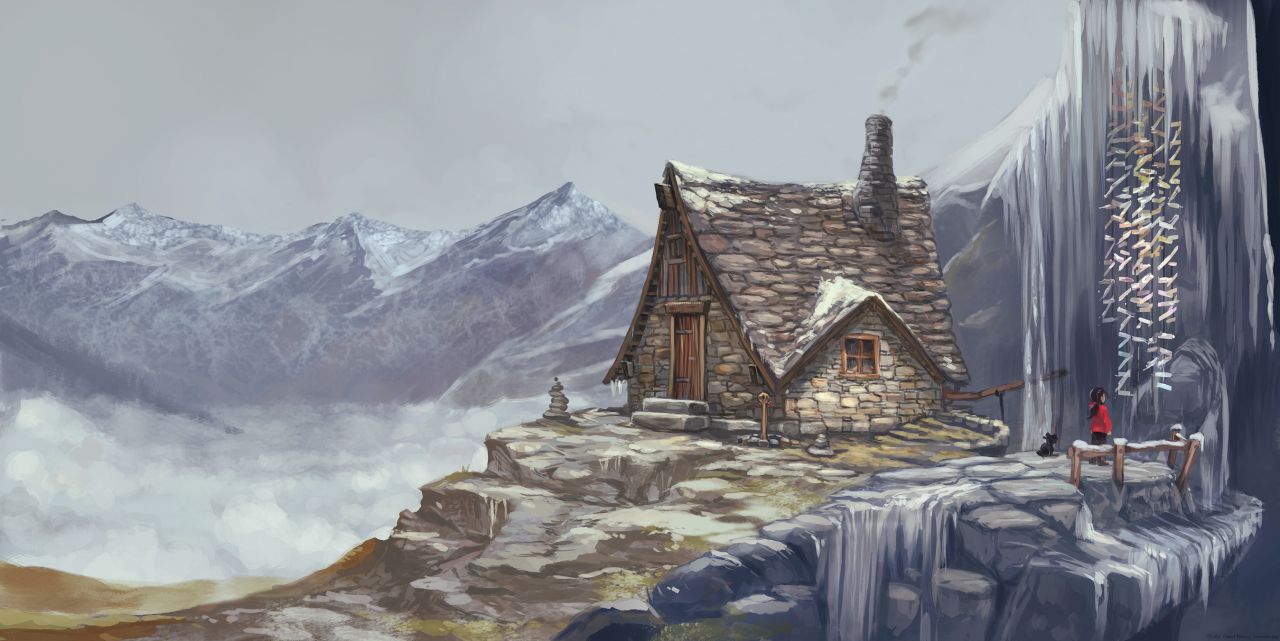
When Spring premiered in April 2019, Revoy shared a larger gallery. He identifies the paintings as Krita work and includes model sheets, expressions and paintovers of early 3D models. He also explains that an introductory scene of Spring waking at home with her dog was removed before production, although he had already designed material for it. The house image below belongs to that abandoned idea. See the complete gallery and its context.
Read the environment as a stage
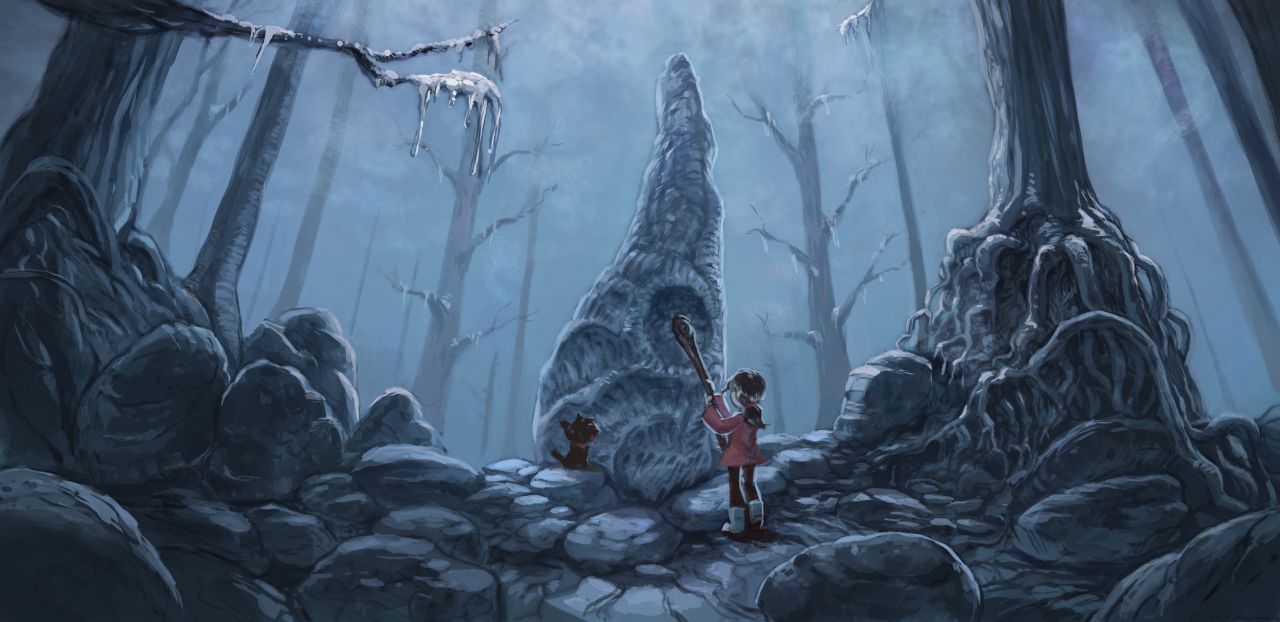
In the forest painting above, the pillar forms a strong central landmark. Tall trunks and rooted foreground shapes establish its scale, while the small figure supplies a human comparison. The red clothing stands apart from the surrounding cold colors. That is our reading of the visible painting, rather than a claim about the artist's private intentions.
Try covering the character with your hand. The forest remains atmospheric, but the action becomes less specific. Put the figure back and the staff, pillar and standing place begin to form a relationship. This is a useful test for your own concepts: does the design explain what someone can do there?
Make three decisions visible
Editorial exercise: invent a location where a traveler must ring a warning bell. Paint three small options using the same traveler. In one, the bell is easy to reach; in another, reaching it is dangerous; in the third, it is difficult to find. Keep the architecture and landscape consistent enough that all three belong to the same world.
Choose an option and add a small plan view marking the path, obstacle and destination. If the perspective painting and plan disagree, resolve that before rendering. Save the rejected thumbnails with a sentence explaining their weaknesses. A discarded design can still document an explored possibility, just as Revoy's unused house concept records a different version of the film's opening.